- Availability & Price
- Search SKU
Filter by attributes
- Flow Rate (dm3/s)
- Flow Rate (SCFM)
- Port Thread Size (Inch)
Transair Lubricators
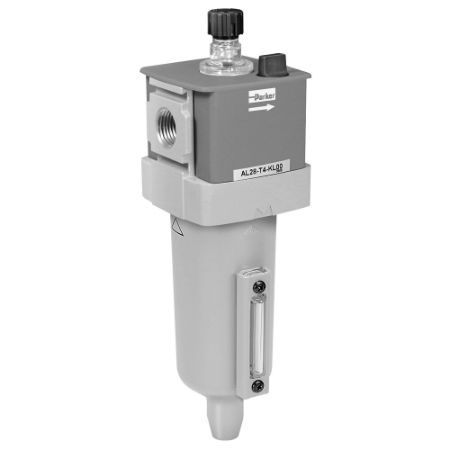
*PRODUCT IMAGE IS REPRESENTATIVE PROVIDED BY THE MANUFACTURER. DO NOT MAKE BUYING DECISIONS SOLEY BASED ON THE IMAGE. PLEASE VERIFY SPECIFICATIONS MEET YOUR REQUIREMENTS.
Parker’s line of mist lubricators provide a controlled release of lubricant at the point of use. These lubricators use oil aerosol to consistently and uniformly provide internal lubrication to air tools and other pneumatic devices. Through the use of a needle valve, the flow of oil becomes a steady, repeatable operation. The needle valve also allows for the flow of oil to be adjusted until the desired rate is achieved. For the best performance, Parker suggests the use of F442 oil.Markets:• Automotive Assembly• Food & Beverage• Packaging• Industrial Plants• AerospaceFeatures/Benefits:• Integral 1/2”, 3/4”, or 1” NPT Ports• Robust, Lightweight aluminum construction• Adjustable oil flow for uniform lubricationApplications:• Compressed Air
Read More...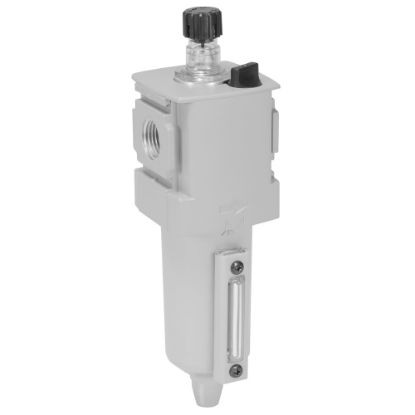
Transair Lubricators - FP32LB94LSNN
Parker's line of mist lubricators provide a controlled release of oil aerosol lubricant. The flow of lubricant can be controlled through the internal needle valve.
POR
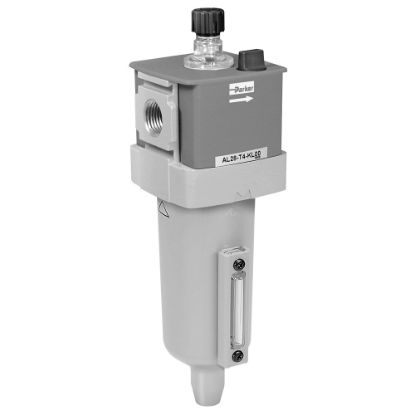
Transair Lubricators - FP33LA94LSNN
Parker's line of mist lubricators provide a controlled release of oil aerosol lubricant. The flow of lubricant can be controlled through the internal needle valve.
POR
Transair Lubricators - FP33LA96LSNN
Parker's line of mist lubricators provide a controlled release of oil aerosol lubricant. The flow of lubricant can be controlled through the internal needle valve.
POR
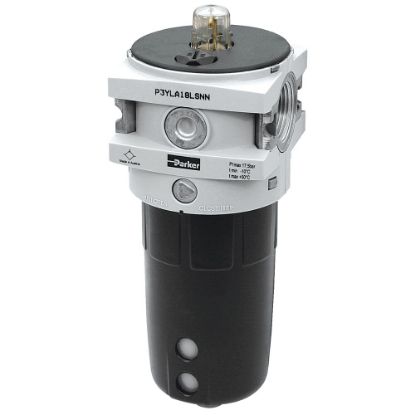
Transair Lubricators - FP3YLA96LSNN
Parker's line of mist lubricators provide a controlled release of oil aerosol lubricant. The flow of lubricant can be controlled through the internal needle valve.
POR
Transair Lubricators - FP3YLA98LSNN
Parker's line of mist lubricators provide a controlled release of oil aerosol lubricant. The flow of lubricant can be controlled through the internal needle valve.
POR